


Bellevue gets significant rainfall from October through April, and most wood fences and decks absorb that moisture without any protection at all. Without regular fence and deck staining, that cycle of wetting and drying causes boards to warp, crack, and rot far sooner than they should. Hiring a painter for this type of project sounds straightforward, but the quality gap between a rushed job and a properly prepared one is enormous. This guide covers what the staining process should actually look like, what questions to ask before hiring, and how to make sure your outdoor spaces stay protected for years.
If you're ready to book rather than research, our Bellevue wood staining service page covers what we do and how to get a quote. This guide focuses on what the process should look like, what questions to ask before hiring, and how to protect your investment for years.
Why Does Fence and Deck Staining Matter So Much in the Pacific Northwest?
The Pacific Northwest moisture cycle is one of the most aggressive environments for untreated wood. Bellevue's wet winters followed by dry, sunny summers cause wood fibers to expand and contract repeatedly, which leads to cracking, warping, and eventually rot if the surface has no protective coating.
Fence staining and deck staining protect the wood from moisture penetration at the surface level. A quality stain also shields boards from UV rays during the dry season, which causes fading and surface breakdown even on wood that feels dry to the touch.
What happens to unprotected wood in Bellevue:
- Moisture absorption causes boards to swell, split, and warp over multiple wet seasons
- UV exposure in summer bleaches the wood gray and breaks down the surface fibers
- Mildew and algae grow in shaded areas and accelerate surface deterioration
- Cracking and checking (fine surface cracks) allow water to penetrate deeper into the board
- Wood rot develops in posts, deck boards, and fence rails when moisture reaches untreated core wood
Most professional painters who work on Bellevue properties consistently note that skipped or delayed staining is the leading reason homeowners end up replacing entire fence sections or deck boards earlier than necessary.
What Is the Difference Between Deck Staining and Deck Painting?
Deck staining and deck painting are not interchangeable, and choosing the wrong one for your surface creates real problems down the road.
Deck staining penetrates the wood fibers and protects from within. Stain does not form a film on the surface, which means it does not chip, peel, or crack the way paint does. It also breathes with the wood as it expands and contracts through seasonal moisture changes. Most professional painters recommend staining for natural wood decks and fences because it works with the material.
Deck painting creates a film on top of the wood. It offers more color options and can look sharp on the right surface, but it requires more prep work and is much more likely to peel if moisture gets underneath the coating. Once paint starts peeling on a deck, the repair process is more labor-intensive than starting fresh with stain.
Staining vs. painting comparison for decks and fences:
For a full breakdown of what deck painting and staining costs in Bellevue, our deck painting cost guide covers both options side by side. For most Bellevue cedar fences and open decks exposed to full weather, deck staining is the more practical and longer-lasting choice. Deck painting makes more sense on covered or shaded structures where moisture exposure is lower. For a full breakdown of deck staining options, products, and pricing by deck type, see our deck staining contractor guide for Bellevue.

What Should a Professional Fence and Deck Staining Process Look Like?
A professional staining project follows a defined sequence. Skipping any part of that sequence reduces how long the finish lasts and how well it protects the wood underneath.
Here is what a thorough fence and deck staining process should include from start to finish:
- Inspect the surface for damaged boards, loose posts, rot, or structural issues that need repair before staining begins
- Power wash the entire surface to remove dirt, mildew, algae, and any old loose stain or coating
- Allow full dry time of 24 to 48 hours after washing before any stain is applied
- Sand rough or splintered areas on deck boards and fence rails to create a smooth, even surface
- Make necessary repairs to cracked boards, loose fasteners, or damaged posts before the staining process continues
- Apply the first coat of stain in long, even strokes using a brush, roller, or sprayer depending on the surface
- Work stain into edges, corners, and posts where coverage gaps are most common
- Apply a second coat where the wood is more porous or where the first coat was absorbed unevenly
- Allow the finish to cure fully before foot traffic or furniture is placed back on a deck surface
A foam roller works well for flat deck board coverage. A sprayer is more efficient for fence staining because it reaches between boards and covers vertical surfaces faster without leaving roller marks.
How Do You Know When Your Deck or Fence Needs Staining Again?
Most wood surfaces in Bellevue need fresh stain every two to three years, but weather exposure and sun orientation can shorten that timeline on south-facing or fully exposed surfaces.
So how do you actually tell when it is time to reapply stain? There are a few reliable tests and visual signs that indicate the existing coating is no longer doing its job.
Signs your fence or deck needs staining:
- Water no longer beads on the surface when you spray it with a hose (the wood absorbs it instead)
- Fading or graying of the stain color even in areas with good sun exposure
- Surface feels rough or splintered where it previously felt smooth
- Mildew or dark staining appearing in shaded areas between boards
- Cracking or checking becoming more visible across multiple boards at once
- Wood feels dry and brittle rather than firm and slightly flexible
The water bead test is the most reliable quick check. If you spray water on your deck or fence and the wood absorbs it immediately rather than beading up, the protective coating is gone and moisture is reaching the wood fibers directly.
💡 Pro Tip: Do the water bead test in early spring before the dry season starts. If water absorbs within a few seconds rather than beading up, plan your staining project for that same season before summer UV exposure adds further damage.
What Should You Look for When Hiring a Painter for Deck and Fence Staining?
Hiring a painter for fence and deck staining is not the same as hiring one for interior walls. Exterior wood staining requires specific product knowledge, prep skills, and experience with weather conditions that most general painting contractors do not prioritize.
The right contractor brings a clear process and is willing to explain each step before work begins.
Hiring a painter checklist for staining projects:
- Ask whether power washing is included in the quoted scope or priced separately
- Confirm the dry time the contractor plans to allow after washing before staining
- Ask what stain product will be used and why it is appropriate for your wood type
- Find out how many coats are included and under what conditions a second coat is applied
- Check whether repairs to damaged boards are included or need to be addressed separately
- Ask about cure time and when the deck or fence will be safe for foot traffic and furniture
- Request a written scope of work that lists prep, materials, coats, and timeline explicitly
A hiring a painter checklist like this one protects you from vague bids and helps you compare multiple quotes accurately. Contractors who cannot answer these questions clearly are often skipping steps that matter.
You can see real fence and deck staining results from Bellevue projects in the HELLO Painting project gallery, which includes before and after photos of exterior wood work completed across the Eastside.
For a detailed breakdown of what fence and deck staining typically costs in Bellevue, see our fence staining cost guide before requesting quotes.
Oil-Based vs. Water-Based Stain: Which Is Better for Bellevue Fences and Decks?
Both stain types work, but they perform differently depending on wood condition, exposure, and how much time you want between applications.
Oil-based stains penetrate deeper into wood fibers and generally deliver longer-lasting protection on weathered or thirsty wood. They take longer to dry between coats and cleanup requires solvent, but the durability on Pacific Northwest cedar is well regarded among professional painters.
Water-based stains dry faster, have lower odor, and clean up with water. They have improved significantly in recent years and many quality water-based formulas now match oil-based performance on newer wood. They are also easier to recoat because lighter sanding is usually sufficient between applications.
Stain type comparison:
Most professional painters who focus on exterior wood staining in Bellevue will recommend a product based on the specific wood condition and exposure of each project rather than defaulting to one formula for every surface.
What Mistakes Do Homeowners Make with DIY Fence and Deck Staining?
DIY fence and deck staining is manageable for small projects and experienced painters. For most full-perimeter fences and decks in Bellevue, the mistakes made during a rushed or underprepared DIY job are common enough to deserve a clear warning.
Most common DIY staining mistakes:
- Staining over a wet surface after washing without allowing proper dry time
- Skipping sanding on rough or weathered boards so stain sits unevenly on the surface
- Applying too much stain at once which causes sticky residue and uneven coverage instead of penetration
- Missing edges, corners, and fence post bases where coverage gaps lead to early deterioration
- Choosing the wrong stain type for the existing wood condition or prior finish on the surface
- Not checking the weather forecast before staining and ending up with rain on a fresh coat
- Skipping a second coat on porous wood sections that clearly absorbed the first one completely
Waiting too long to apply a new coat after the old one has failed is another common issue. Once wood fibers start to crack and check, staining becomes a repair process rather than a maintenance one, and the prep work required increases significantly.
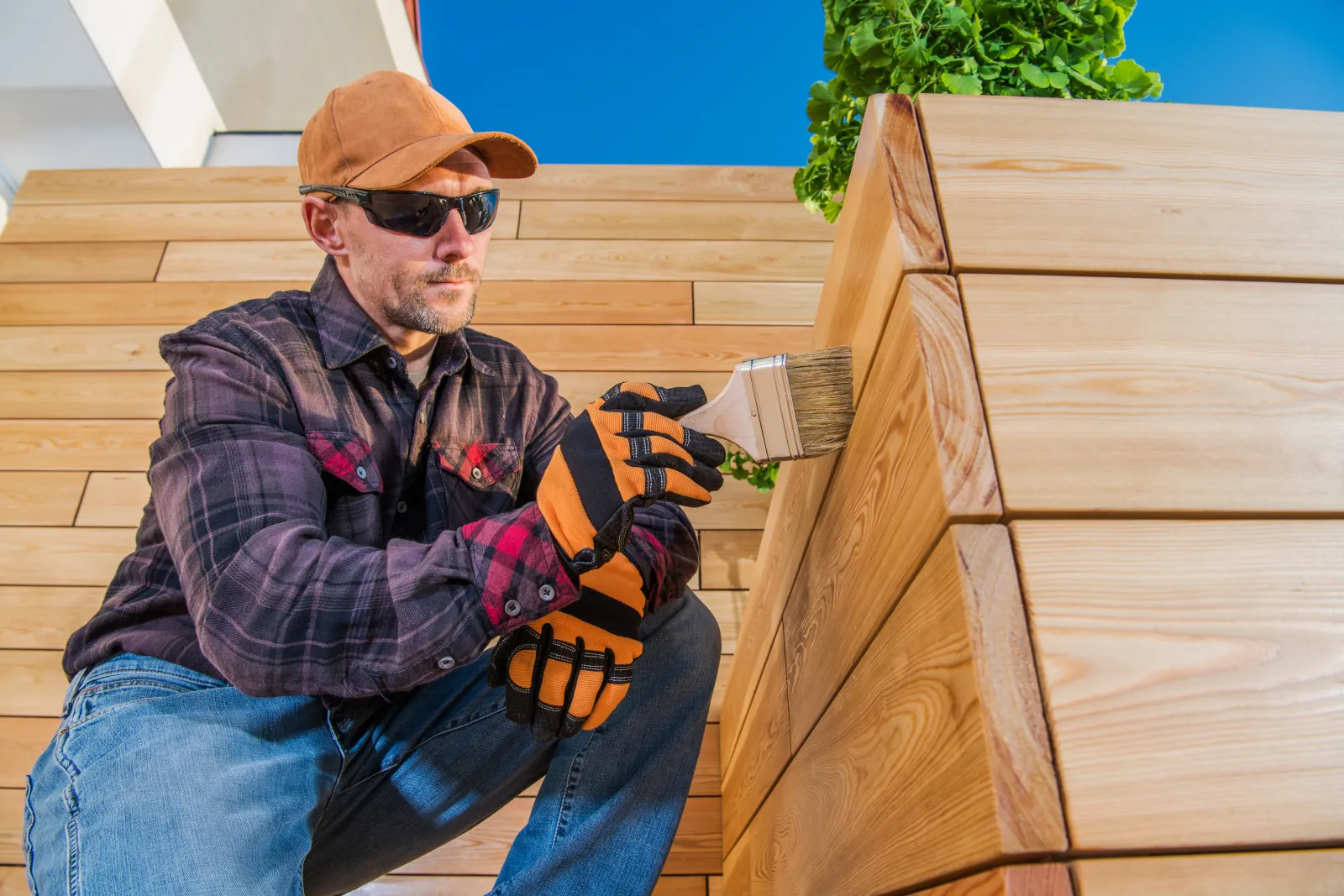
Is It Better to DIY or Hire a Professional for Fence and Deck Staining?
For most Bellevue homeowners with a full cedar fence perimeter and an open deck, professional fence and deck staining delivers noticeably better results and longer protection than a DIY approach.
When DIY makes sense:
- Small fence sections under 50 linear feet in good condition
- Deck under 200 square feet with minimal weathering
- Homeowner has prior staining experience and proper equipment
- Project involves simple flat boards with no detail work or elevated sections
When hiring a painter makes sense:
- Full perimeter fence staining over 100 linear feet
- Deck with railings, stairs, or elevated sections requiring careful coverage
- Surface has not been stained in several years and needs thorough prep
- Prior stain has failed or peeled and prep work is required before a new coat
Professional services save time, deliver more consistent coverage, and reduce the risk of mistakes that shorten the life of the finish. The difference in longevity between a properly prepared professional staining project and a rushed DIY job is often measured in years, not months.
Conclusion
Proper fence and deck staining protects Bellevue outdoor spaces from the moisture, UV damage, and weathering that degrade untreated wood faster than most homeowners expect.
Whether you are staining a cedar fence for the first time or refreshing a deck that is due for maintenance, the prep work matters as much as the product.
Hiring a painter with a clear, documented process is the best way to make sure that work holds up through multiple Pacific Northwest weather cycles.
Reach out to HELLO Painting to discuss your fence or deck project and request a free estimate for your specific surfaces and scope.
FAQs
How often should fence and deck staining be done in Bellevue?
Most professional painters recommend reapplying stain every two to three years in the Pacific Northwest due to the wet winters and dry summers that accelerate wood deterioration. South-facing or heavily sun-exposed surfaces may need attention closer to the two-year mark. The water bead test is the most reliable way to check whether your current coating is still working.
What is the best stain for cedar fences in Bellevue?
Cedar responds well to both oil-based and high-quality water-based stains, with oil-based formulas penetrating deeper on older or weathered wood. Semi-transparent stains are the most popular choice for cedar because they preserve the natural wood grain while delivering solid moisture and UV protection. A professional painter can recommend the right product based on your fence's current condition and prior stain history.
How long does deck staining take to cure before use?
Most deck stains are dry to the touch within a few hours but need 24 to 48 hours to cure fully before foot traffic. Placing furniture back on a freshly stained deck too early can leave marks and disrupt the finish before it has hardened completely. Your contractor should confirm the specific cure time for the product being used on your project.
What should I ask when hiring a painter for fence staining?
Ask whether power washing and dry time are included in the scope, what stain product will be used, how many coats are planned, and whether board repairs are part of the quote. Request a written scope of work that covers every step from prep to final coat. A clear hiring a painter checklist like this one helps you compare bids accurately and protects you from incomplete quotes.
Does fence and deck staining increase home value?
Yes, well-maintained outdoor wood surfaces improve curb appeal and can positively affect a home's perceived value during a sale. Fresh staining signals to buyers that the property has been maintained, which reduces the likelihood of inspection-based price negotiations. A stained fence and deck also avoids the cost of replacement that neglected wood surfaces eventually require.
Can you stain a fence or deck if it has old paint on it?
Staining over existing paint is not recommended because stain is designed to penetrate bare wood and will not absorb properly through a painted surface. Old paint typically needs to be fully stripped or sanded away before stain can be applied correctly. In some cases, continuing with paint is a more practical choice if full stripping is not feasible.
.svg%20fill.svg)


.jpg)


.svg)