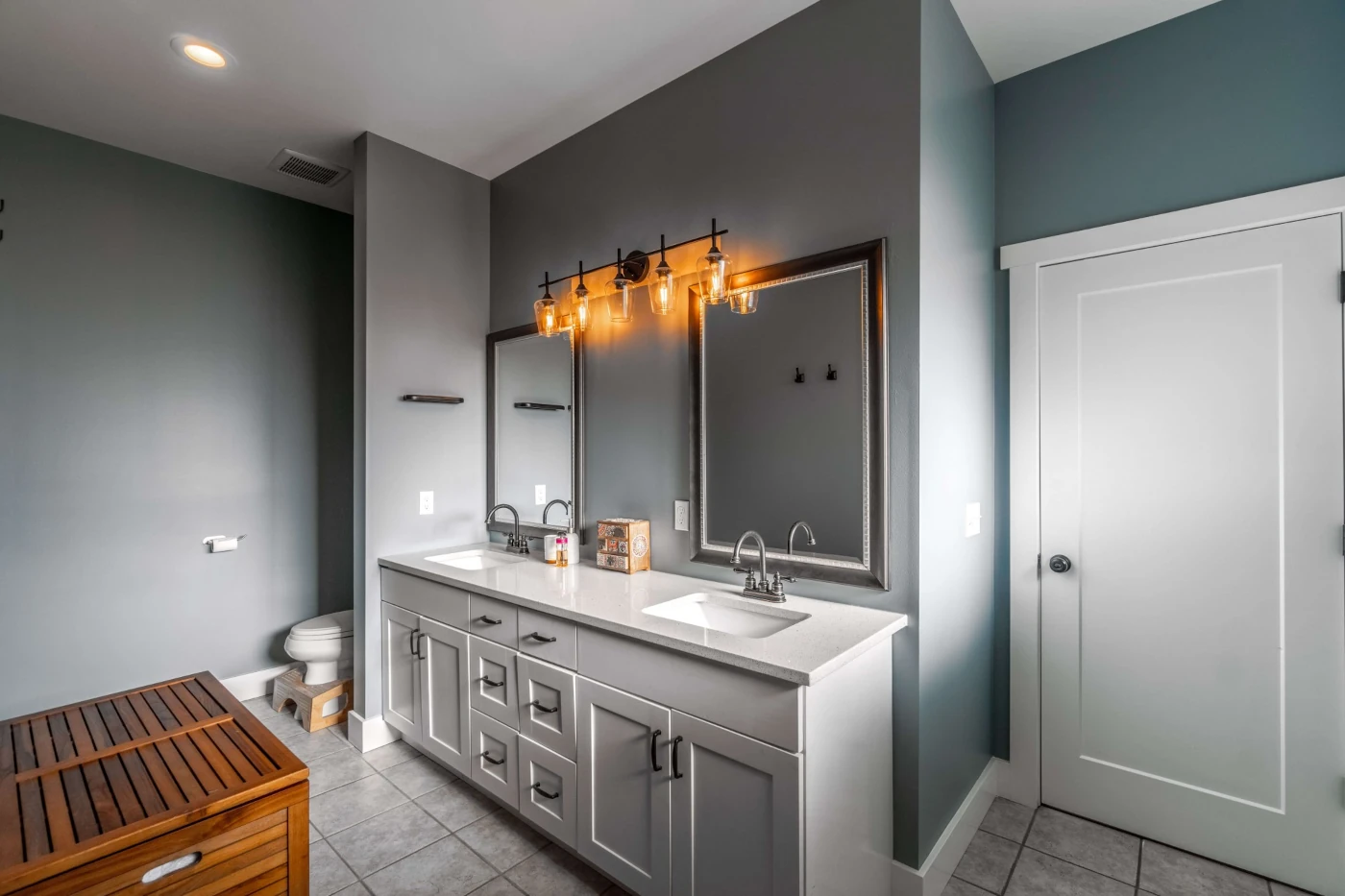
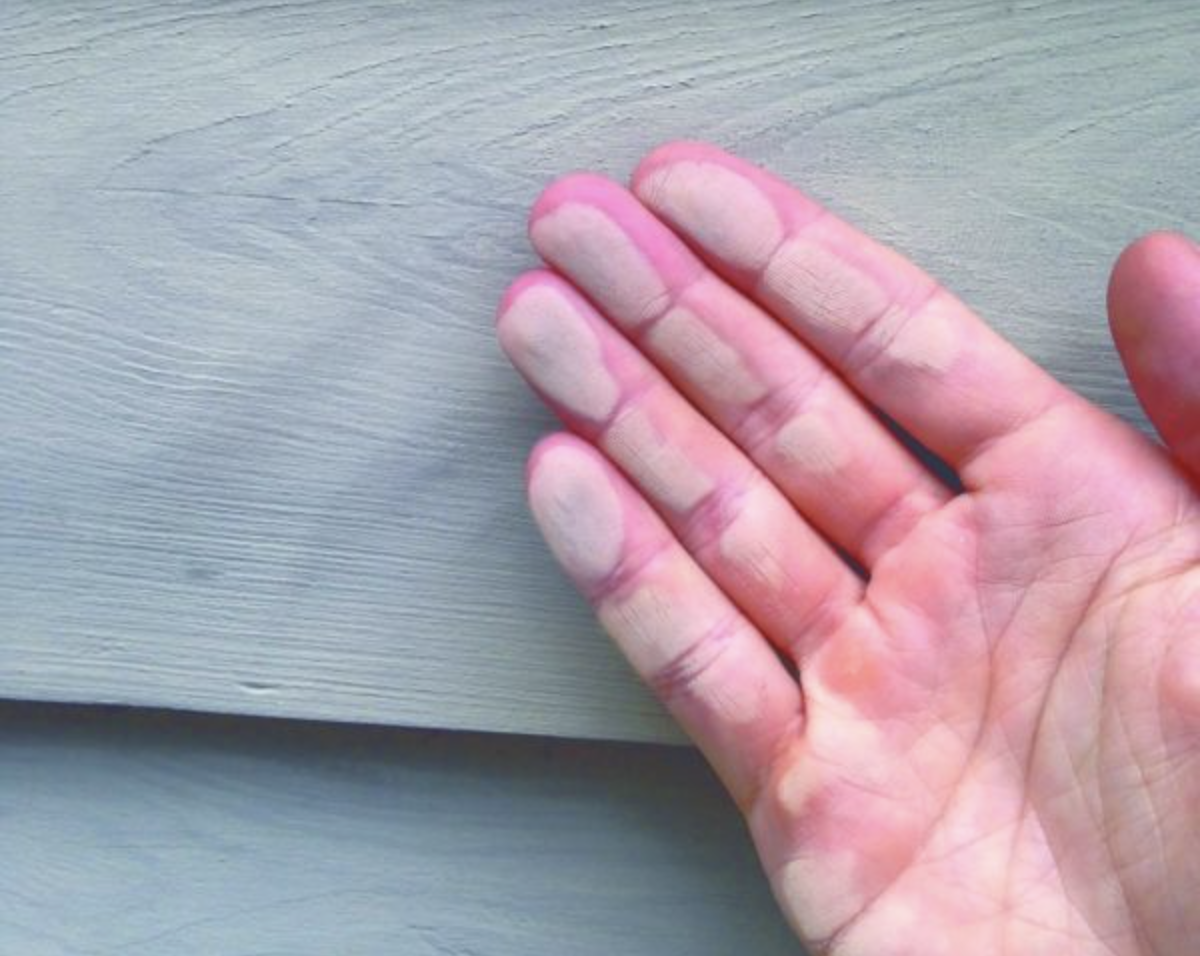
The best paint for bathroom walls in a damp Pacific Northwest home is a moisture-resistant satin or semi-gloss with a mildew-resistant finish. Prime bare and patched spots with a primer suited to the material. Paint is only part of the fix, though. Walls that stay damp from poor ventilation can peel and stain, Sherwin-Williams notes, so airflow matters too.
At HELLO Painting, our bathroom painting services in Bellevue and across the Eastside start with that moisture. This guide covers the paint and sheens we use and why bathroom paint peels. It also explains how to handle mildew and paint a room with no window.
Why Are Pacific Northwest Bathrooms So Hard on Paint?
Months of rain raise indoor humidity, so condensation forms around windows and in bathrooms. Every hot shower adds more steam. Our room-by-room guide to how long paint lasts explains how that steady moisture wears paint down faster and gives mildew a foothold. On one primary bathroom we repainted, years of steam had peeled the ceiling paint and stained the walls.
Condensation and Your Bathroom Fan
The EPA's guide to mold and moisture says condensation can be a sign of high humidity. When moisture collects on windows, walls or pipes, the EPA advises drying the wet surface quickly and reducing the moisture source.
Its advice for bathrooms is simple. Run the bathroom exhaust fan or open the window when you shower. In places that stay damp, such as showers, the EPA says more ventilation and more frequent cleaning usually keep mold from coming back.
Signs of High Moisture in Your Bathroom
- Condensation on windows, walls or pipes
- Peeling paint near the shower or window
- Bubbling paint on walls or ceilings
- Brownish stains on the paint surface
- Mildew that comes back after cleaning
Any of these points to a moisture problem to fix along with new paint. As the EPA puts it, the key to mold control is moisture control.

What Makes the Best Paint for Bathroom Walls?
The right bathroom paint stands up to steam, wipes clean and stays bonded to the wall. Look for these traits on the label.
- Moisture resistance. Choose paint made for humid conditions. It's what we use on bathroom walls, ceilings and trim.
- Mildew resistance. A mildew-resistant coating helps the paint film resist mildew growth. Sherwin-Williams says its paints made for bathrooms resist mildew growth and stay washable when applied according to label directions.
- A washable sheen. A higher sheen sheds moisture and handles regular wiping, while lower sheens tend to absorb it.
- Water-based and low-VOC. The bathroom paints we use are water-based and low-VOC, with minimal odor. VOCs are volatile organic compounds, the chemicals behind strong paint smell.
- The right primer underneath. Primer creates a bonding layer, so the topcoat grips patches, bare spots and stains.
Even the best bathroom paint can't dry out a damp room by itself. Good ventilation and proper surface preparation matter as much as the can.
The Bathroom Paints We Use
We use Sherwin-Williams moisture-resistant paints on bathroom walls, ceilings and trim, and Benjamin Moore Advance on vanities. Each surface gets the paint sheen that fits how it's used and cleaned.
What Sherwin-Williams Says About Bathroom Paint
Sherwin-Williams describes its bathroom paints as specially formulated to give a mildew-resistant finish in humid rooms. It says these finishes suit interior walls, ceilings and trim. Common household stains can be removed with nonabrasive cleaners. For bathrooms, Sherwin-Williams recommends its Duration Home line for its stain, moisture and mildew resistance.
You can pick colors in a free color consultation with Sherwin-Williams, and our crew handles the rest.
Is Paint and Primer in One Enough?
Sometimes. Our guide to how paint primer works notes that paint and primer in one can work on previously painted, smooth surfaces. A dedicated primer is often more reliable on bare, repaired or stain-prone areas. For a water stain on the ceiling, Sherwin-Williams advises fixing the cause first, then using a primer sealer made for stain blocking.
Best Paint Finish for Bathroom Walls and Ceilings
For the best paint finish for bathroom walls, choose satin or semi-gloss, since both shed moisture and wipe clean. Our crews use satin on walls and ceilings and semi-gloss on trim. Over the shower, a semi-gloss ceiling is worth considering. For satin vs. semi-gloss in a bathroom and other rooms, see our paint sheen guide and our matte, satin and gloss comparison.
Mildew-Resistant Paint vs. Standard Flat Paint
Flat or matte paint is a common choice for bedrooms, where it hides flaws and gives a soft look. Here's how it compares with a mildew-resistant bathroom paint on a steamy wall.
Mildew-resistant paint protects the paint surface. It won't stop a leak, dry a damp wall or clear mildew that's already growing, so cleanup and airflow still come first.
Why Bathroom Paint Peels, and How to Stop It
Peeling paint in a bathroom usually points to moisture, weak prep or both. Repainting alone treats the symptom. Fixing the cause helps keep the new paint on the wall.
Common Mistakes That Make Bathroom Paint Peel
- A weak or unused fan. Sherwin-Williams notes that walls kept damp by poor ventilation can peel. They can also show surfactant leaching, which looks like brownish stains.
- Skipped primer. When primer is skipped or applied poorly, the topcoat can lose its grip, cover unevenly or let old stains bleed through.
- Paint over mildew or grime. The EPA warns that paint applied over moldy surfaces is likely to peel.
- Flat paint in a wet room. Most standard flat paints aren't made for steam or repeated scrubbing.
- A hidden leak. The EPA notes that mold can hide inside walls around leaking or condensing pipes.
How to Keep It From Coming Back
Start with the moisture. Run the fan or open a window every time you shower, as the EPA recommends, and fix plumbing leaks as soon as possible.
Then clean off dust and grease, scrape away anything loose and sand rough spots smooth. Prime bare and patched spots before two finish coats, so the paint has a bonding layer to grip.
Why Bathroom Ceilings Need Extra Care
Bathroom ceiling paint takes steam too. Our sheen guide notes that flat paint on a bathroom ceiling can absorb humidity and show spotting over time. That's why our bathroom repaints use the same primer and moisture-resistant paint on the ceiling as on the walls.
💡 Pro Tip: A small humidity meter from a hardware store shows whether your bathroom stays damp. The EPA suggests keeping indoor humidity below 60 percent, ideally 30 to 50 percent.
How Should You Handle Mildew Before Painting?
Clean it off, let the surface dry and fix the moisture source before any paint goes on. The EPA's mold cleanup guidance says not to paint or caulk moldy surfaces, because paint applied over moldy surfaces is likely to peel.
For small spots on hard surfaces, the EPA advises scrubbing mold off with detergent and water, then drying the area completely. For mold over about 10 square feet or a lot of water damage, the EPA points to its remediation guidance instead.
Mildew that keeps coming back is a moisture signal. If you clean up mold but don't fix the water problem, the EPA says the mold will most likely return.
Painting a Bathroom With No Window
A windowless bathroom depends on fans for airflow. Sherwin-Williams notes that fans are a good way to circulate air and speed up dry time when you're working in an area without windows.
Tips for a Windowless Bathroom
- Keep the exhaust fan running while you paint and for a day or two afterward, until the paint smell clears.
- Point a box fan out through the doorway, and open a window in a nearby room to pull in fresh air.
- Keep a standing fan a few feet from fresh paint, pointed at an indirect angle.
- Avoid heat to speed drying, since Sherwin-Williams says heat changes can affect the color as it dries.
- Use a water-based, low-VOC paint to keep the odor down.
- Skip flat paint and pick satin or a semi-gloss finish, so the walls can handle steam once showers start again.
Our tips on how to ventilate a room when painting cover more ways to keep air moving.
Dry Time vs. Cure Time
Sherwin-Williams separates dry time, when paint is dry to the touch, from cure time, when it reaches full performance. It says acrylic and latex paints typically take two or three weeks to cure. Run the fan during every shower while the new finish cures, and open the door afterward to increase air movement, as the EPA suggests.
How HELLO Painting Repaints a Damp Bathroom
Our bathroom repaints build on our interior painting process, with added steps for moisture repair, priming and tile protection. A standard bathroom with walls, ceiling and trim takes 1 to 2 days.
- Free estimate. We discuss scope and budget, then send a detailed scope of work and quote.
- Color consultation. You choose colors in a free consultation with Sherwin-Williams or Benjamin Moore.
- Protect the room. We protect anything that isn't being painted and carefully cover grout lines for a uniform tile look.
- Repair moisture damage. We sand, patch holes, fix nail pops and treat moisture-damaged areas so the new paint can bond.
- Prime. Patched and bare spots get a primer suited to the material.
- Two coats. We apply two coats of Sherwin-Williams moisture-resistant paint, with satin on walls and ceilings and semi-gloss on trim.
- Inspection and warranty. We clean up, inspect the work with you, touch up any spots and deliver our 2-year written workmanship warranty.
On a Redmond bathroom refresh, our crew finished repairs before any paint went on. Then we painted the room in colors the homeowner chose to suit its design.

Ready for a Bathroom That Holds Up to Steam?
The best paint for bathroom walls lasts longest when moisture has a way out. Choose a moisture-resistant satin or semi-gloss, prime bare and patched spots, and clean off mildew before painting. After that, run the fan every time you shower.
If your bathroom paint keeps peeling in Bellevue, Redmond or anywhere else we serve, we're glad to take a look. Request a free bathroom painting estimate, and we'll send a detailed scope of work and quote for your room.
Frequently Asked Questions
Can you paint over mildew?
No. On small spots on hard surfaces, clean it off with detergent and water, let the surface dry completely and fix the moisture source first. The EPA warns that paint applied over moldy surfaces is likely to peel.
How long before I can shower after painting a bathroom?
Check the paint label for its dry time before the first shower. Sherwin-Williams says acrylic and latex paints typically take two or three weeks to fully cure, even after they feel dry to the touch, so run the fan during every shower until then.
Is flat paint OK in a bathroom?
We don't recommend it near the shower or on the ceiling. Most standard flat paints aren't made for steam or repeated scrubbing, so satin or a semi-gloss finish is the better choice.
Should a bathroom be eggshell or satin?
We recommend satin on bathroom walls and ceilings. On request, we use matte or eggshell on accent areas away from the shower.
What is the best paint for a bathroom ceiling?
A moisture-resistant paint in satin or semi-gloss. We use satin, the same sheen as the walls. Over the shower, a semi-gloss ceiling is worth considering.
Does a bathroom need special paint?
Not always, but we recommend it. Sherwin-Williams says its bathroom paints are specially formulated for a mildew-resistant finish in humid rooms. A moisture-resistant satin or semi-gloss over the right primer holds up to steam and wiping better than standard flat wall paint.