


Ceilings are the most overlooked surface in any interior painting project, and they are also the one that changes a room the most dramatically once painted properly. Many homeowners repaint every wall in a room and never touch the ceiling, missing out on one of the easiest ways to make a space feel finished and intentional rather than half done.
The ceiling painting Bellevue homeowners increasingly ask HELLO Painting about is exactly what this guide covers. Whether you want a fresh coat of white ceiling paint, a bold accent color overhead, or simply want to understand ceiling painting cost before booking a project, this guide covers it all.
We will walk through the process, the cost, and a growing trend that flips the classic white ceiling on its head entirely.
How Much Does Ceiling Painting Cost in Bellevue?
Ceiling painting cost in Bellevue typically runs between $1.50 and $3.00 per square foot for a standard, smooth ceiling. Textured or heavily detailed ceilings, including those with crown molding or multiple angles, generally run $3.00 to $6.00 per square foot due to the extra labor involved in cutting in and covering uneven surfaces.
Typical Cost by Ceiling Type
What Affects Your Final Price
A few factors drive how much to paint ceiling space:
- Square footage and ceiling height, since taller ceilings mean more surface area
- Surface condition, since smoke damage or old drywall repairs add prep time
- Texture type, since popcorn or heavily textured ceilings need more paint
For a full picture of how ceiling work fits into a larger project, see how ceiling painting factors into total room painting cost in a typical Bellevue home.
💡 Pro Tip: Painting the ceiling at the same time as a full room repaint typically saves around 30 percent compared to scheduling ceiling painting as its own separate project, since the prep work, drop cloths, and furniture moving are already done.
Why Are Ceilings Harder to Paint Than Walls?
Ceilings are harder to paint than walls because gravity works against you the entire time. Paint drips, rollers spatter overhead, and your arms fatigue faster than they do rolling a vertical wall.
Cutting in along crown molding or a textured ceiling edge also takes more care than a straight wall line, since there is often less room to correct a mistake. Overspray is a bigger risk too, since paint falling from above lands on floors, furniture, and light fixtures below.
Why Homeowners Hire Out This Job
Many homeowners turn to professional ceiling painting Seattle and Bellevue crews handle every week, since the fatigue and mess add up fast on a DIY attempt.
- Constant overhead rolling causes fatigue faster than wall painting
- Drips and spatter require more masking and floor covering
- Cutting in around crown molding takes a steadier hand
- Textured ceilings need the right roller cover to avoid flattening the texture
Clearing furniture and covering floors before work begins protects the rest of the room from drips, and a professional painter brings the tools and technique to keep the mess contained.
Popcorn Ceiling vs Smooth Ceiling: What Changes When You Paint Them?
Popcorn ceiling and smooth ceiling surfaces both can be painted, but the process and materials differ quite a bit. A textured, popcorn ceiling soaks up more paint and needs a thicker roller cover to reach into all the bumps.
Smooth Ceilings
Smooth ceilings take a standard roller nap and generally need less paint overall. Cutting in along trim is straightforward, since there is no texture to work around.
Popcorn or Textured Ceilings
Textured ceilings need a 3/4-inch roller cover to push paint into every bump. Cutting in takes longer, and the ceiling generally uses more paint per square foot than a smooth one.
If your ceiling has heavy texture and you are considering removing it instead of painting around it, our popcorn ceiling removal guide walks through that cost and process in detail.
Should Every Ceiling Be Painted White?
White ceiling paint remains the most common choice, but it is not a rule that applies to every room. White reflects the most light and tends to make a ceiling recede visually, which is why it became the classic choice for decades of home construction.
Why White Has Been the Default
A stark white ceiling under the Pacific Northwest's cool, overcast daylight can feel cold and clinical rather than bright and welcoming. A warm white or soft cream often softens a room significantly during gray winter months, without losing the light-reflecting benefit of a pale ceiling color.
When to Break the Rule
- Low ceilings benefit most from lighter colors, since they help a room feel taller
- Tall or vaulted ceilings can handle bolder ceiling paint ideas without feeling closed in
- North-facing rooms often look better with a warm white than a stark, cool one
Lighter ceiling colors help rooms with lower ceiling height appear taller, since the color blends into the light and draws the eye upward.
Accent Ceilings: The Bold Color Trend Bellevue Homeowners Are Trying
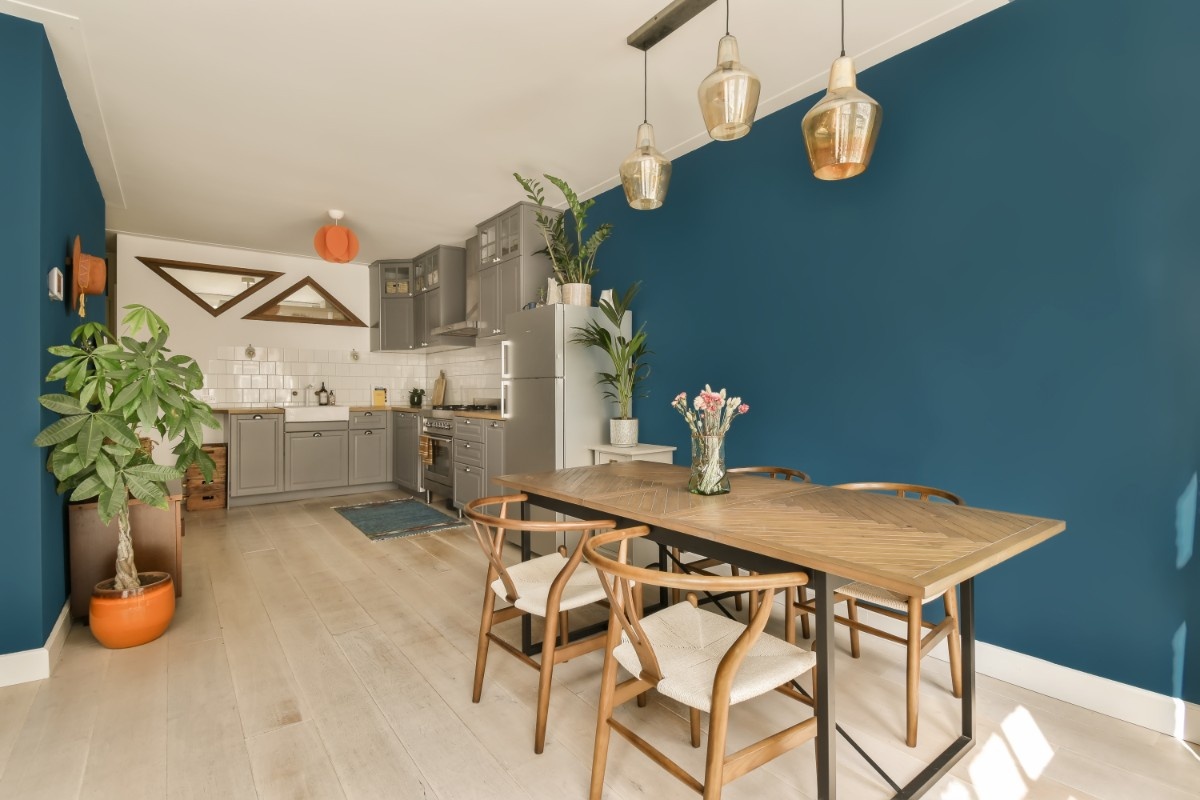
An accent ceiling means painting the ceiling itself a contrasting or complementary color instead of the usual white, and it is one of the more striking painted ceiling bold color trends showing up in Bellevue homes right now. Think a deep blue ceiling above white walls in a living room, or a warm terracotta ceiling that matches the trim in a dining room.
Best Rooms for an Accent Ceiling
This approach works especially well in smaller, more intimate rooms, where a bold ceiling color reinforces the cozy feel rather than competing with the room's other elements. A dining room, powder room, or reading nook often makes a better candidate than a large, open-concept living space.
A few accent ceiling ideas worth trying:
- A deep navy or forest green ceiling in a small, cozy dining room
- A warm terracotta or clay tone that echoes existing trim color
- A ceiling painted to match the walls exactly, creating a cocoon-like effect in a bedroom
If you already have an accent wall in mind, pairing it with a coordinating ceiling pulls the whole room together. Our guide to accent wall painting in Bellevue covers color pairing ideas that work well alongside a colored ceiling.
You can see real examples of colored and accent ceilings in our project gallery, including a few Bellevue homes that have made the switch from plain white.
Choosing the Right Ceiling Paint and Finish
The best ceiling paint is almost always an ultra-flat finish, since a flat sheen hides surface imperfections and avoids reflecting overhead light fixtures back into the room. A semi-gloss or higher sheen on a ceiling tends to highlight every seam and dent instead of hiding it.
Why Flat Finish Wins
Flat paint absorbs light instead of bouncing it back, which is exactly what a ceiling needs to look clean and even. This is the opposite of what most homeowners want when looking straight up at a shinier finish.
Sherwin-Williams Ceiling Paint Options
Sherwin-Williams ceiling paint is formulated specifically for this job, with a spatter-resistant formula that helps keep paint on the roller instead of the floor below. Many options are also self-priming, which can save a full step on a ceiling that is already in decent shape.
For an accent ceiling, one popular approach is tinting the same paint formula used on an accent wall into a lighter or matching shade for the ceiling above it. This creates a cohesive look rather than two unrelated colors competing in the same room.
💡 Pro Tip: In bathrooms or laundry rooms, ask about a moisture-resistant ceiling paint option, since standard ceiling paint can struggle with steam and humidity over time.
Painting a Ceiling Without the Mess
Painting a ceiling well comes down to preparation and the right tools just as much as steady hands.
The Process Step by Step
Here is a simple process professional painters follow.
- Clear the room and cover the floor. Move furniture out or to the center of the room, then cover everything with drop cloths.
- Repair any drywall damage first. Patch gouges and re-texture any damaged spots before painting begins.
- Prime stained or damaged areas. A quality primer blocks smoke damage or water stains from bleeding through the new coat.
- Cut in along the edges first. Work carefully along crown molding or the wall line before rolling the main surface.
- Use the right roller cover for the texture. A 3/4-inch roller cover handles textured ceilings better than a standard nap.
- Roll in one consistent direction. This keeps the finish even and avoids visible lap marks once dry.
- Pull painter's tape while the paint is still wet. Waiting until it dries increases the chance of peeling or a torn edge.
Not comfortable tackling this yourself? Our interior painting services in Bellevue include ceiling work as part of every full room repaint.
.webp)
Common Ceiling Painting Mistakes to Avoid
A few mistakes come up often when ceilings get painted without much planning.
- Skipping floor and furniture coverage. Ceiling painting drips more than wall painting, and cleanup takes longer without proper coverage.
- Using a wall paint sheen instead of ceiling paint. Higher sheen finishes highlight every ceiling imperfection under light.
- Ignoring stains before painting over them. Smoke damage or water stains can bleed through a fresh coat without the right primer.
- Using the wrong roller cover on texture. A thin roller cover can flatten popcorn texture instead of coating it evenly.
- Waiting too long to remove painter's tape. Dried tape is more likely to peel paint away with it at the edges.
Bringing Your Ceiling Up to Speed With the Rest of the Room
The ceiling painting Bellevue homeowners request more each year is one of the simplest ways to finish a room that already looks halfway done. Whether you stick with classic white ceiling paint or try a bold accent color overhead, the right prep and paint make all the difference between a flat finish and a flawed one.
Getting these details right the first time saves both money and a repaint down the road.
Ready to talk through cost and color options for your ceiling? Contact HELLO Painting to get started, or request your estimate to get pricing for your project.
FAQs
How much does it cost to paint a ceiling?
Ceiling painting cost generally runs from $1.50 to $3.00 per square foot for a smooth ceiling, with textured or detailed ceilings running higher due to added labor and material.
How much does it cost to paint ceilings throughout an entire home?
Total cost depends on the number of rooms, ceiling height, and condition of each ceiling. Painting all ceilings during one visit is generally more efficient than scheduling each room separately.
Should ceilings always be painted white?
No, white is common because it reflects light and helps ceilings recede, but warm whites or bold accent colors both work well depending on the room and lighting.
How do I paint a textured or popcorn ceiling?
A textured ceiling needs a thicker roller cover, usually 3/4-inch, and more paint than a smooth ceiling. Cutting in around the texture also takes more time and care.
What paint finish works best on a ceiling?
An ultra-flat finish is standard for most ceilings, since it hides surface imperfections and avoids reflecting light from fixtures below.
.svg%20fill.svg)




.svg)